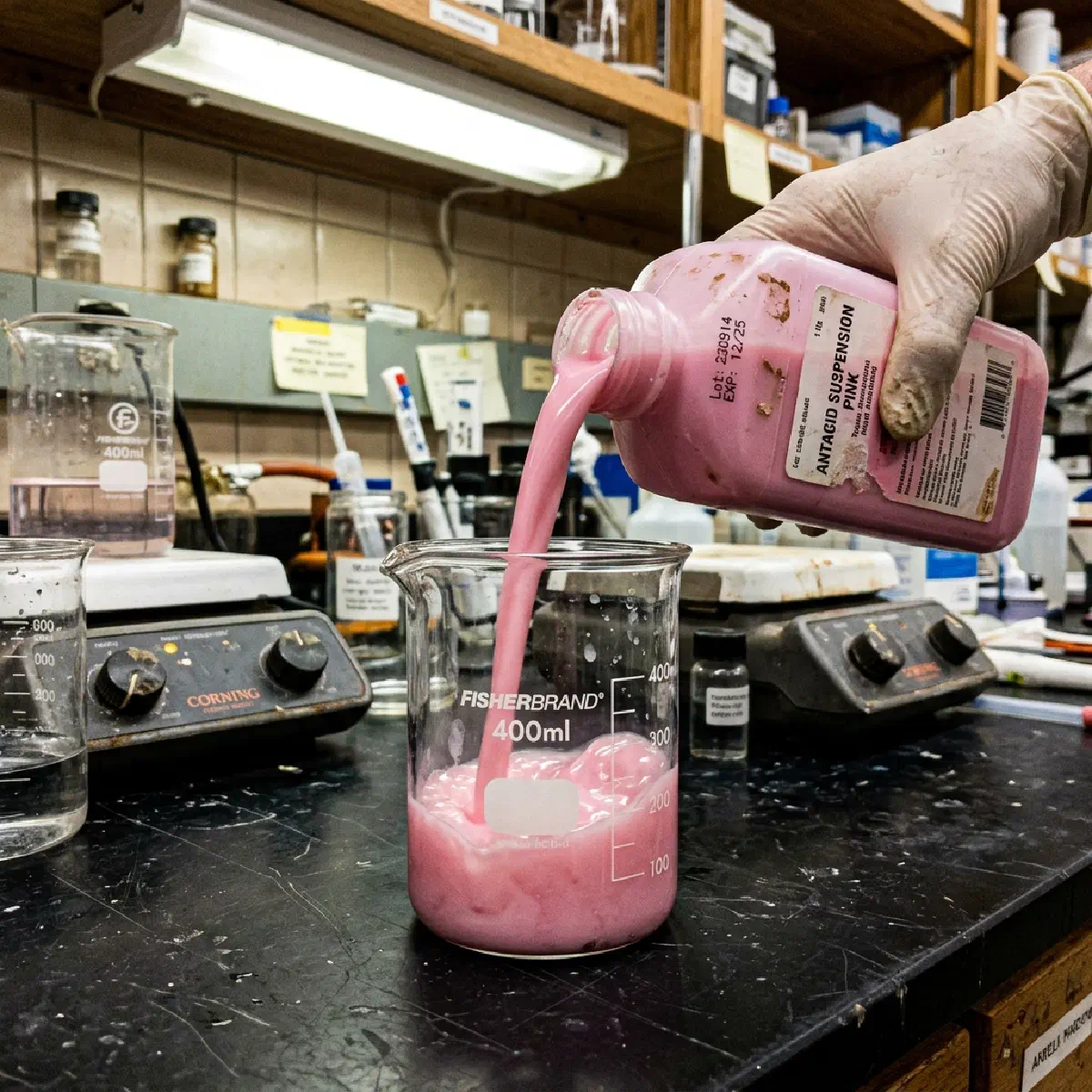
The gastro segment is one of the most reliably high-repeat-prescription categories in Indian outpatient medicine — GI complaints (acid reflux, GERD, peptic ulcer, constipation, bloating) are chronic in a significant proportion of adult patients, meaning a physician who trusts your gastro brand writes it not once but dozens of times across a patient relationship.
Most brand owners entering gastro start with one product — often sodium alginate, because it’s a mechanistically superior GERD product with a compelling prescribing story. That’s usually the right call. The stronger brands then expand from that anchor into a complete gastro portfolio, which is where this guide begins.
Sodium alginate already part of your enquiry?
See our dedicated Sodium Alginate Suspension article for formulation specifics, mechanism of action, and prescribing context. This article picks up where that one leaves off — expanding the view to the full gastro portfolio.
The Gastro Portfolio Map
A complete gastro suspension portfolio addresses three distinct clinical segments:
| Clinical Segment | Indication | Key Products |
|---|---|---|
| GERD / Acid Reflux | Mechanical raft barrier for reflux | Sodium Alginate + Sodium Bicarbonate + Calcium Carbonate |
| Hyperacidity / Dyspepsia | Acid neutralisation + gas relief | Magaldrate + Simethicone; Aluminium Hydroxide + Magnesium Hydroxide; Activated Dimethicone combinations |
| Peptic Ulcer / Mucosal Protection | Mucosal coating + local anaesthetic relief | Sucralfate 1000mg suspension; Sucralfate + Oxetacaine |
| Constipation / Laxative-Antacid | Dual action: bowel stimulation + antacid | Milk of Magnesia + Liquid Paraffin; MOM + LP + Sodium Picosulfate |
| Alkalizer / Urinary Acidosis | Urinary alkalinisation | Disodium Hydrogen Citrate solution |
Each segment has a distinct physician and prescribing context. The prescribing physician for sodium alginate is often a gastroenterologist or GP who has diagnosed GERD. The Sucralfate + Oxetacaine prescriber is often managing peptic ulcer. The MOM + LP prescriber is managing functional constipation, often in elderly patients. Building a portfolio that covers all five segments gives a brand owner access to the full width of GI prescribing without excessive SKU complexity.
Sodium Alginate: The Anchor and How It Works
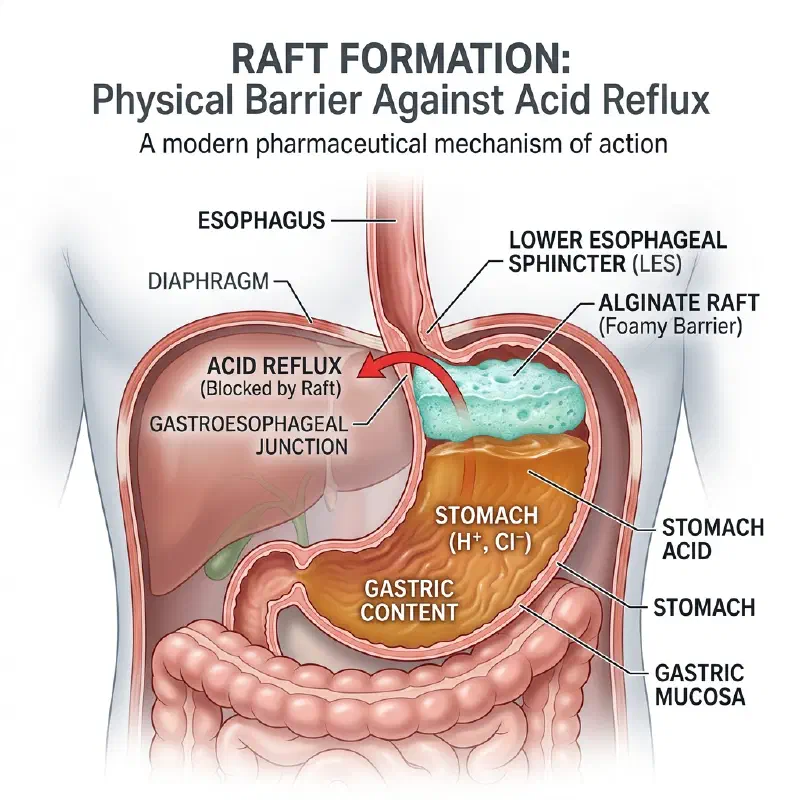
Sodium alginate suspension works through physical chemistry rather than pharmacology. When the alginate contacts gastric acid, it cross-links with calcium carbonate (co-formulated) and forms a viscous, low-density gel that floats on top of gastric contents — the “raft.” This raft physically occupies the gastro-oesophageal junction, blocking acid reflux into the oesophagus.
The sodium bicarbonate component helps form CO₂ bubbles that make the raft buoyant. The gel is neutrally charged relative to the gastric mucosa — it doesn’t irritate the oesophagus and provides a physically protective layer.
Why this matters for prescribing: Physicians can explain the mechanism of action to patients in a single sentence (“it forms a gel barrier that stops acid coming up”). This explainability is one reason sodium alginate products retain prescriptions — patients understand what they’re taking and can observe the symptom relief pattern that confirms the mechanism.
View Sodium Alginate Suspension product
Sucralfate: The Mucosal Healer
Sucralfate works by a completely different mechanism: it forms an adherent, protective polymer complex with damaged mucosa — essentially coating the ulcerated area and protecting it from further acid and pepsin attack. It’s not an antacid (it has minimal acid-neutralising capacity) but a mucosal protectant.
Plain Sucralfate 1000mg suspension is indicated for peptic ulcer disease — typically taken before meals and at bedtime to maintain the mucosal coat throughout the high-risk acid-secretion periods.
Sucralfate + Oxetacaine suspension adds a local anaesthetic to sucralfate’s mucosal protective action, providing fast relief from the burning and pain of active ulceration while the sucralfate works on healing. This combination is frequently prescribed for patients with:
- Active peptic ulcer with severe pain
- Post-H. pylori eradication therapy (maintaining the mucosal coat during healing)
- NSAID-induced gastric mucosal damage
Magaldrate + Simethicone: The Versatile General Antacid
Magaldrate (Hydroxymagnesium Aluminate) is a hydrotalcite antacid with a unique property: it has a buffering action over a wide pH range, releasing antacid content in proportion to gastric acid load rather than all at once. This makes it more sustained in action than basic aluminium or magnesium hydroxide antacids.
Simethicone (activated dimethicone) is an anti-foaming agent that breaks down gas bubbles in the stomach, reducing bloating and flatulence. The Magaldrate + Simethicone combination is a broad-spectrum antacid for hyperacidity with gas — one of the most commonly prescribed antacid formulations in Indian general practice.
Milk of Magnesia + Liquid Paraffin: The Laxative-Antacid
Milk of Magnesia (Magnesium Hydroxide) serves two distinct functions depending on dose:
- At low doses: antacid effect (acid neutralisation)
- At higher doses: osmotic laxative (draws water into the colon, softening stool)
Combined with Liquid Paraffin (a lubricant laxative that softens stool by coating it), the combination is specifically indicated for constipation with hyperacidity — a common presentation in elderly patients, pregnant women, and patients on constipating medications (opioids, iron supplements, calcium channel blockers).
This is a distinct prescribing segment from acid reflux or ulcer management — the prescribing physician is often managing functional GI complaints rather than upper GI disease. The products sit in the same pharmacy shelf space as antacids, but the prescribing trigger is different.
View Milk of Magnesia + Liquid Paraffin Suspension · Plain Milk of Magnesia
Building a Complete Gastro Portfolio
For a brand owner building a gastro range, a practical 5-SKU portfolio that covers the major prescribing segments:
| SKU | Product | Clinical Target | Launch Priority |
|---|---|---|---|
| 1 | Sodium Alginate + Sodium Bicarb + Calcium Carbonate | GERD, acid reflux | First — highest differentiation |
| 2 | Sucralfate 1000mg suspension | Peptic ulcer, mucosal protection | Second — complementary, different indication |
| 3 | Sucralfate + Oxetacaine | Active ulcer pain + protection | Third — premium extension of SKU 2 |
| 4 | Magaldrate + Simethicone | Hyperacidity + bloating | Third or Fourth — broad GP antacid |
| 5 | Milk of Magnesia + Liquid Paraffin | Constipation + antacid | Fourth — different prescriber, adds channel width |
Conclusion
Gastro suspensions reward brands who understand that the category is not one product — it’s five distinct clinical sub-segments, each with a different mechanism, prescribing physician, and commercial life cycle. Sodium alginate is the right anchor because it’s mechanistically differentiated and explainable. Sucralfate + Oxetacaine adds a second completely different clinical indication. The antacid and laxative combinations extend reach without cannibalising the first two.
Ready to build your gastro portfolio?