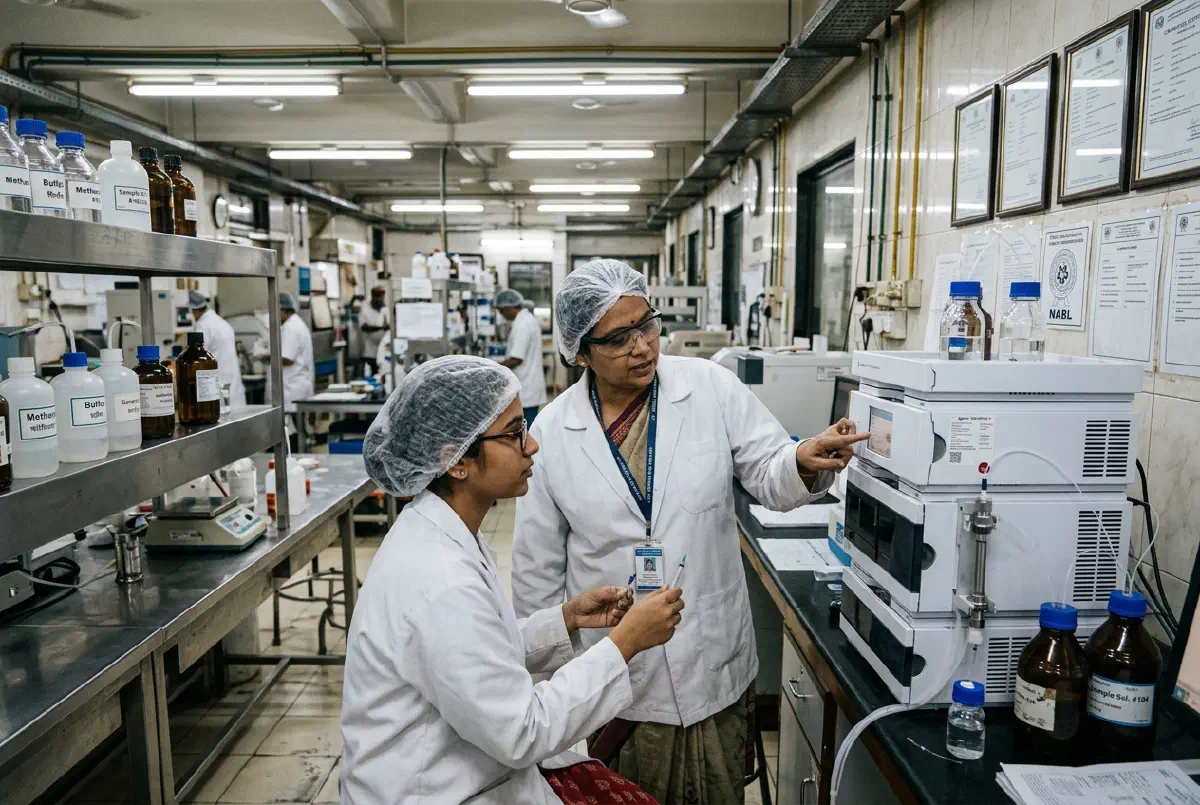
Equipment is the part of a manufacturing facility everyone can see and photograph. The mixing tanks, the filling lines, the HPLC instruments in the QC lab — these are tangible and visible. They appear in brochures. They’re photographed for facility profiles.
The people operating that equipment, writing the BMR entries, running the QC tests, and deciding whether a borderline result gets escalated or approved — these are invisible to a buyer who hasn’t spent time inside the facility.
And yet, in over two decades of pharmaceutical manufacturing, the pattern is consistent: batch failures and quality deviations trace back to human factors far more often than equipment failures. A centrifuge doesn’t decide to skip a critical check. An operator does.
This matters for brand owners because when you choose a contract manufacturer, you are making a quality decision about people, not just about a facility.
Related reading: How to Choose a Third-Party Pharma Manufacturer · Revised Schedule M GMP Compliance Guide · Quality Control in Pharma Contract Manufacturing
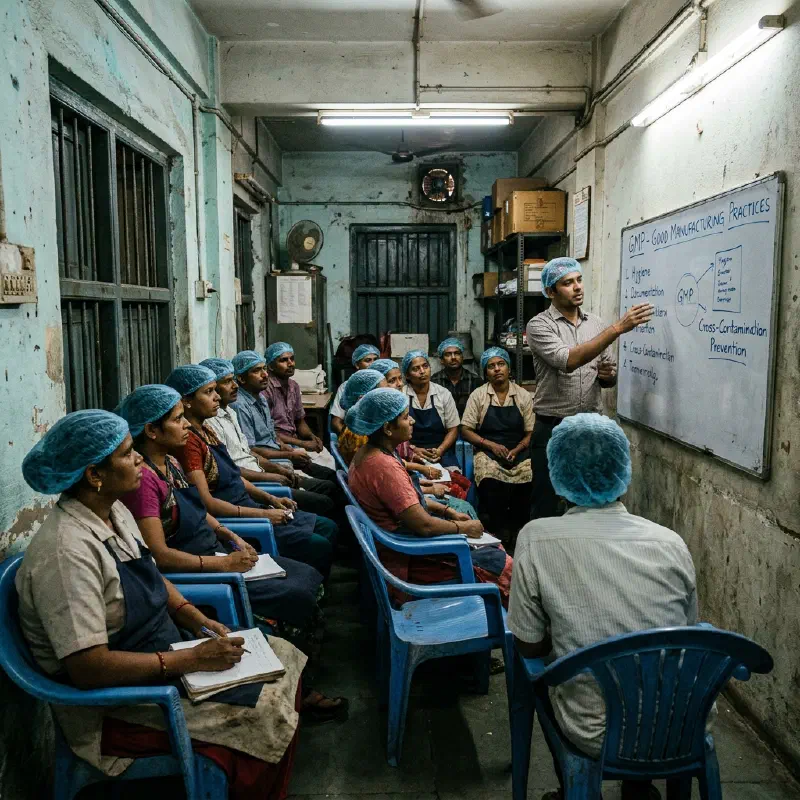
India’s Life Sciences Skill Gap — The Honest Picture
India graduates a large number of pharmacy and pharmaceutical sciences students each year. The gap isn’t in quantity of graduates — it’s in the readiness of those graduates for GMP-compliant production roles.
The typical Indian pharmacy graduate has strong theoretical knowledge. What they often lack:
- Experience operating validated production equipment under live batch conditions
- Understanding of ALCOA+ data integrity requirements in practical documentation
- Exposure to real deviation management, OOS investigation, and CAPA workflows
- Supervised practice in aseptic technique or controlled environment work behaviour
The result: a facility that relies primarily on fresh graduates — rather than experienced technicians with facility tenure — is a facility where training shortfalls translate directly into process variability and documentation errors. This is the gap that industry initiatives like LSSSDC Skillverse are working to address at scale.
The LSSSDC’s Skillverse 2026 national skill summit represents the industry acknowledging that the problem is structural — not individual. Verify current LSSSDC programme details directly at lsssdc.org.
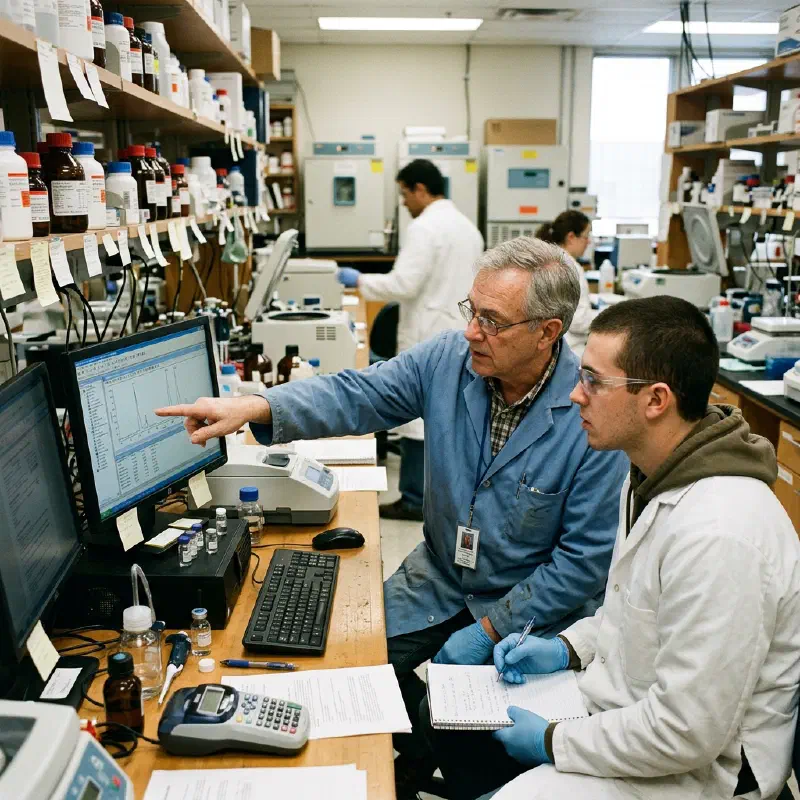
What Workforce Quality Actually Looks Like in Production
Consider a single batch of paediatric azithromycin dry syrup — a high-volume, well-understood product that should present minimal manufacturing complexity:
Step 1 — Dispensing: The operator must correctly weigh the azithromycin and excipients against the BMR specification. A trained operator double-checks the scale tare, verifies the ingredient against the dispensing checklist, and records with date and signature. An undertrained operator might use a scale that hasn’t been recently calibrated and skip the double-check to meet a batch schedule.
Step 2 — Blending: The blend time and speed must match the validated parameters. A trained operator follows the BMR parameters precisely and documents the actual time and equipment ID. An undertrained operator might extend blend time “to be safe” — changing the process without understanding that deviating from the validated parameters requires a formal deviation note.
Step 3 — QC pH check: The QC analyst measures the reconstituted suspension pH against specification. A trained analyst runs the pH calibration buffers before each measurement session, documents them, and reports an out-of-spec result immediately for investigation. An undertrained analyst might calibrate once in the morning and assume it’s still valid six hours later, or might rerun an OOS sample without logging the original result.
None of these are equipment problems. All of them produce batch records that are either non-compliant or conceal real process deviations. And all of them are workforce training failures.
Three Questions That Reveal Workforce Quality
When evaluating a contract manufacturer, these three questions cut through the facility tour and the certification presentation:
Question 1: “What is the average tenure of your production and QC operators?”
A facility with strong retention — operators who have been there 3, 5, 7 years — has accumulated institutional knowledge that cannot be documented into SOPs. Those operators have seen deviations, know what normal looks like, and can recognize when something is off. High turnover tells you the training investment is constantly being lost.
Question 2: “Can you walk me through your internal SOP training process — how often are operators trained, and how is competency assessed?”
Good answer: “We have a documented training schedule. New operators complete a probationary period before unsupervised batch work. We run annual retraining with a written assessment. QA signs off on training records.”
Red flag: “Yes, we train our operators” — said without any specifics about how, how often, or how assessment works.
Question 3: “If your lead QC analyst is absent on a batch release day, who covers the batch release decision and what’s their qualification?”
Good answer: A named, qualified backup with documented authority.
Red flag: Uncertainty, deflection to “we have a team,” or the implication that batch release would simply wait for the primary analyst to return.
Saar Biotech’s Workforce Approach
Our production and QC teams at EPIP Phase-1, Baddi have been built around retention and competency development rather than hiring volume. Our senior production and QC supervisors have multi-year facility tenures. Our SOP training is documented with assessment, and our deviation management workflow is integrated into batch documentation rather than treated as a separate quality event.
For buyers who want to understand this in practice rather than on paper, the best approach is a facility visit. We welcome buyers at our Baddi facility — the real evidence of workforce quality is visible in a working production or QC observation, not in a presentation.
Saar Biotech Manufacturing Unit — Facility Profile
DM Pharma — Solid Dosage Unit
Conclusion
The life sciences skill gap in India is a real structural challenge — industry bodies, government training initiatives, and manufacturers with strong retention and training cultures are working to address it. For a pharma brand owner, the practical response is not to wait for the industry-level solution. It’s to ask the three workforce quality questions every time you evaluate a contract manufacturer, and to choose accordingly.
Equipment can be upgraded in a capital investment cycle. People take years to build.